|
|
|
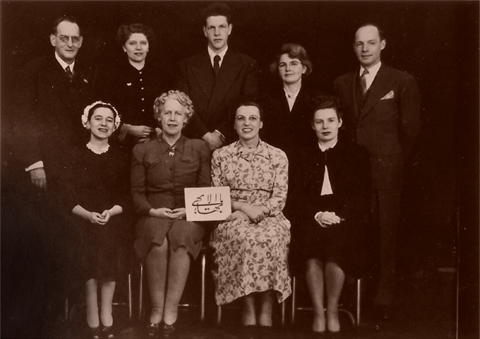
 The Bahá'ís of Ottawa come from a variety of backgrounds, brought together by a common belief in the oneness of humanity and the unity of religion. We work alongside others to become a force of positive change, applying insights from the Bahá'í teachings to bring about a more just, peaceful and unified community. 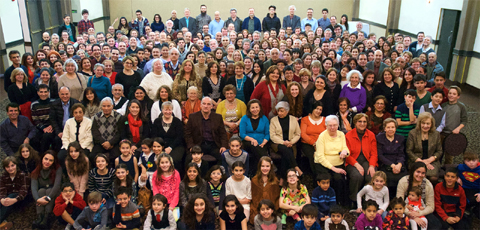 Many are attracted by the Bahá'í teachings about individual spirituality, social transformation, and the construction of a global civilization. They want to fulfill their own potential and play their part in building a better world. At the heart of Bahá'í community life is a pattern of activities whose purpose is to unify and transform our neighbourhoods. We also offer a warm invitation to anyone wanting to attend Bahá'í devotional meetings, study circles, empowerment programs for junior youth and classes for children. There is no requirement to be a member of the Bahá'í community to fully participate in these activities. History The history of the Bahá'í Faith in Ottawa reaches back to 1926, when Queen Marie of Romania was the first Bahá'í to visit the city. In 1940, Winnifred Harvey became the first Bahá'í resident in Ottawa. She was one of 12 children raised in rural Manitoba and earned her way through teacher’s college and university in the 1930s by scholarships. Other early Ottawa Bahá'ís included Lucille Giscome, a journalist and one of the early African Canadian Bahá'ís, Charles Nealy Murray, a civil servant from the US, and Katherine Ferguson, the first Ottawa Bahá'í of Aboriginal descent. In 1948, there were enough Bahá'ís to form the first Local Spiritual Assembly of the Bahá'ís of Ottawa. Winnifred Harvey remained at the heart of early community life. Helen Andrews, a longtime member of the Ottawa community, remembers “a marvelous spirit existed at [her home]” and Winnifred Harvey was at the heart of it. “People would gather at her place and never leave,” said another friend.
|
|
|